
In the Gambia, One ID Printout Can Prevent a Second Payment

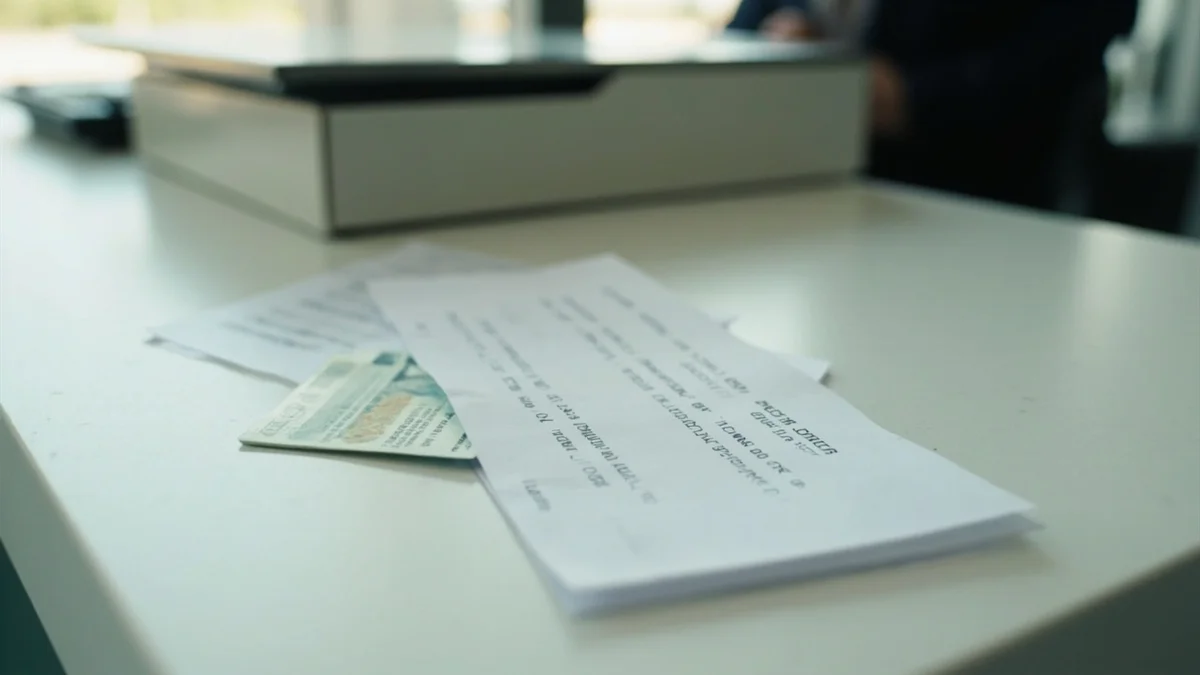 Image Created with AI for Illustration
A small paper printout can carry more weight than its appearance suggests. For someone caught between two versions of an identity-card system, it may be the evidence that separates a free continuation from paying and starting again.
That became the practical issue in The Gambia after applicants said they had completed enrolment under an earlier arrangement but were being told to repeat the process following a change of service provider. In a 21 October 2026 report, the acting public-relations officer of the Gambia Immigration Department clarified that people with a valid existing card, or with a printout showing earlier enrolment, should be processed free of charge.
The clarification does not make every national ID application free. It answers a narrower and more urgent question: when an applicant has already entered the official process, what proves that the government should recognise that earlier step?
The Printout is Evidence of an Earlier Transaction
The distinction starts with the government’s rollout rules. An official statement published on 25 August 2026 set the first-time national ID fee at D450, payable through Ecobank. It also identified two groups to be processed without charge during the rollout: holders of valid, unexpired national ID cards issued by the Immigration Department, and holders of enrolment printouts issued by the department.
That makes the printout more than a queue ticket. It connects the applicant to work already completed in the earlier system. The 21 October clarification repeated the same principle after concerns that some people were being asked to begin again.
The document does not itself become a national ID card, and it does not guarantee that a card will be issued immediately. Its purpose is more specific: it shows that the holder belongs to the previously enrolled group covered by the no-charge arrangement.
Three Situations Should Not Be Blurred Together
Confusion is easiest when every person at an enrolment centre is treated as a “new applicant”. The published rules describe three materially different positions.
First, a person with a valid and unexpired Immigration Department national ID is covered by the replacement arrangement. Second, someone who enrolled earlier and still has the department’s printout can use that record as evidence for free re-enrolment. Third, a genuine first-time applicant falls under the D450 fee and must establish eligibility through the required documents.
The Immigration Department’s ID guidance says the Gambian ECOWAS identity card is intended for citizens aged 18 and above. It lists evidence such as a birth certificate, Gambian passport, voter’s card, or certificates from a Seyfo or village Alkalo. People who obtained citizenship by registration or naturalisation follow a separate evidence route.
Those categories concern eligibility for the card. The printout question concerns continuity between systems. Someone can still be required to prove citizenship while also being entitled not to pay a second enrolment fee. One rule does not erase the other.
Keep the Record That Shows What Already Happened
The most useful action is also the least technical: preserve the original printout, receipt, and any valid or expired identity document connected to the earlier application. Do not surrender the only copy to an unofficial intermediary. If an office retains a document, ask what record confirms its receipt.
Applicants should also distinguish an official requirement from an informal instruction. The Immigration Department’s acting spokesperson told Askanwi that the enrolment printout is the evidence needed for free processing. If a counter gives different instructions, the discrepancy should be raised with the department using the names and dates shown on the applicant’s records, rather than resolved by making an unexplained second payment.
This is a recommendation about documenting the transaction, not a promise about the outcome. A damaged printout, an incomplete earlier registration, or a mismatch in personal details may still require examination. The authority, not the piece of paper alone, decides whether the earlier record can be matched.
Application Forms Are Supposed to Be Free
The fee and the form are separate. The August government statement said application forms were free. The Ministry of Interior later restored its website and directed applicants to its official national ID form download page.
That boundary matters because independent reporting in September described shortages of hard-copy forms at two enrolment offices and people offering forms for money outside the official process. The same investigation found inconsistent payment experiences at two Ecobank branches.
An official D450 first-time fee does not turn a free form into a paid product. Nor does the existence of a bank payment channel prove that every applicant owes the fee. The applicant’s category—first-time, valid-card replacement, or earlier enrolment with a printout—must be established before money changes hands.
Free Processing Does Not Mean No Verification
The no-charge arrangement concerns the cost of continuing or replacing an earlier record. It does not remove identity checks. The government’s general national ID application guidance says applicants attend an immigration office with a birth certificate or passport, complete fingerprinting and a photograph, pay the applicable fee, and wait for collection notice.
For a returning enrollee, the applicable fee may be zero under the clarified arrangement, while the authority can still need to match the person, biographic details, photograph, fingerprints, and prior record. Re-enrolment is therefore not proof that the old process was meaningless. It can be the step that connects an earlier claim to the current production system.
This also explains why a portrait prepared for one document route should not automatically be assumed valid for another. The identity-card authority controls the capture and evidence process for its own card. Applicants should follow the instructions for the exact transaction in front of them, rather than a generic passport or photo checklist.
A Five-Step Check Before Returning to an Office
An applicant affected by the transition can reduce uncertainty by checking five things:
- Decide Whether the Case is a First Application, a Valid-Card Replacement, or Continuation of an Earlier Enrolment.
- Gather the Valid Card or Official Enrolment Printout That Proves the Category.
- Bring the Citizenship or Identity Evidence Required for That Route.
- Download Forms from the Official Ministry of Interior Channel Rather Than Paying for a Supposedly Scarce Copy.
- Ask for a Receipt and a Written Explanation Before Making Any Payment That Does Not Match the Published Rules.
The 21 October clarification is valuable because it restores a simple principle during a complicated handover: a change behind the counter should not erase an applicant’s documented place in the process. In The Gambia’s national ID rollout, the humble printout is the bridge between those two systems—and a reason to keep every official record until the physical card is safely in hand.
Related Articles

Germany's Airport E-Gates Open to Emirati Travellers After Registration
Emirati citizens can use Germany's EasyPASS airport gates after registration, but the biometric passport and entry rules still matter.

Montenegro's New Visa Rule Starts Before the Airport
Travellers from five countries must check a new Montenegro visa route, its exemptions and the required passport-photo application pack.

France's Border Checks Still Require the Right Travel Document
France is continuing internal Schengen border checks through 30 April 2027. The document to carry depends on citizenship, not the route or mode of transport.
Frequently Asked Questions
Everything you need to know about Rostrio
Still Have Questions?
Our support team is here to help you.
Leave a comment
Share your thoughts on this article. All comments are reviewed and auto translated before publication.