
What Schiphol’s Egate Failure Changed — and What It Didn’t

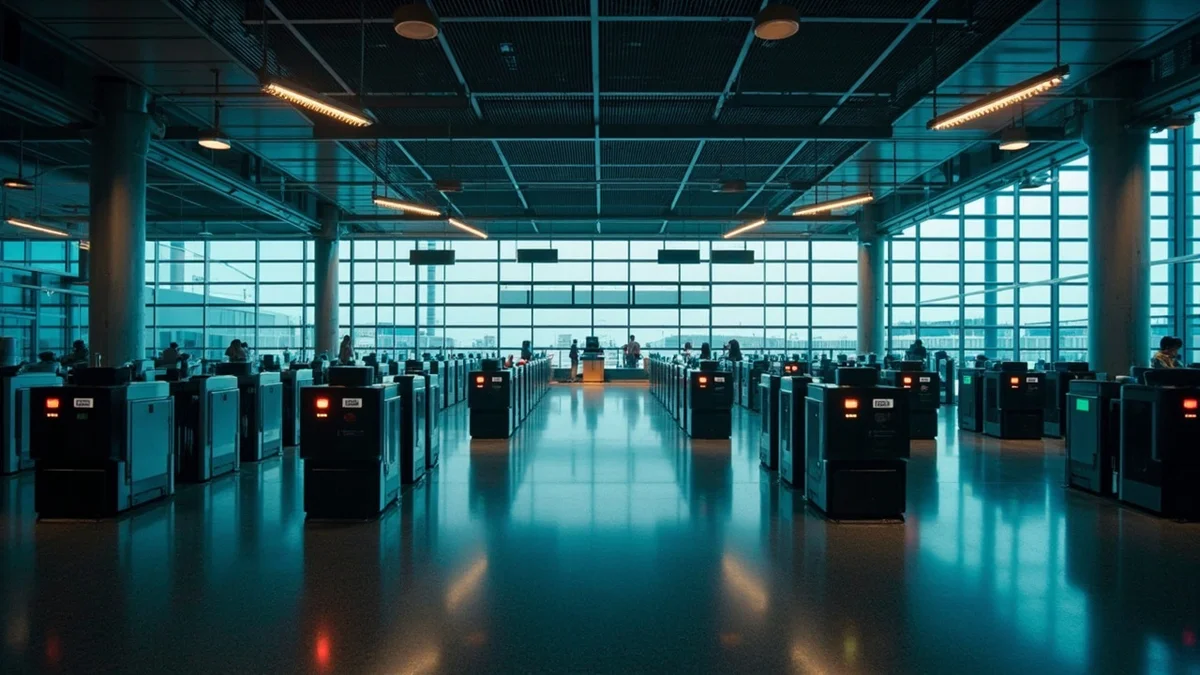 Image Created with AI for Illustration
For several hours at Schiphol, the fastest route through passport control simply disappeared. All 78 automated gates were out of service, and travellers who would normally scan a chip passport and face a camera had to join the staffed queues instead.
The failure began at about 6 a.m. on 18 October 2026, according to same-day reporting from NL Times. KLM reported delays of about 30 minutes, while the airport was already busy during the Dutch autumn school holiday. The Royal Netherlands Marechaussee confirmed the self-service passport-control outage, warned that queues were unavoidable and said there was not yet a forecast for restoration when its notice was published.
The visible consequence was a line. The more useful lesson was hidden inside it: an automated gate is a way to perform a border check, not the travel document itself. When the channel failed, the underlying requirement to prove identity did not vanish. It moved back to a person at a desk.
The Gate Reads a Passport; It Does Not Replace One
Schiphol’s eGates are self-service border checkpoints. The Marechaussee’s official eGate guidance explains that a traveller places the photo page of an eligible chip passport on the scanner, removes items such as glasses or a hat and looks into the camera. The system reads the document and compares the live traveller with the passport holder’s identity.
That distinction matters because “digital border” can sound more document-free than it is. The traveller may not speak to an officer, but the process still begins with a physical passport containing a readable chip. Eligibility also depends on age, nationality and the route through the airport. A national identity card does not work at Schiphol’s automated gates; a traveller using one must go to a staffed desk where that card is valid for the journey.
The same official guidance anticipates failure. Gates can close for maintenance, a technical problem or an operational decision, and a traveller whose automated check does not succeed is directed to a Marechaussee officer. Automation changes the speed and location of the check. It does not create an entitlement to cross the border without the required document.
Manual Control is a Fallback, Not a Different Journey
During the 18 October outage, manual control absorbed passengers who would otherwise have used the gates. That made the queue longer, but it did not turn a non-Schengen trip into a Schengen trip, extend an expired passport or remove a destination’s visa rules.
It also did not mean that every traveller needed the same document. A Dutch or other eligible European traveller may be able to use a national identity card for particular journeys. Other routes require a passport. Residence cards, visas, electronic travel permissions and consent documents for children can answer different questions again. The fact that all passengers may appear to be moving towards one staffed area should not be mistaken for one universal paperwork rule.
This is why the best travel-document check happens before the airport. Identify the destination, the traveller’s citizenship or residence status, the accepted document type and any validity period the destination requires. Then check whether a visa or electronic permission must be linked to that passport. A queue can change at short notice; those requirements usually do not.
The Portrait Still Connects the Two Routes
An eGate uses the passport portrait as part of an automated identity check. At a staffed desk, an officer can inspect the same document and the person presenting it. The technology and pace differ, but both routes depend on the passport remaining a trustworthy link between the record and its holder.
That does not mean a traveller should prepare a new passport photo because an airport system has failed. A valid, undamaged document does not become defective merely because a gate is offline. Renewal is a separate decision, governed by the issuing authority’s rules and the traveller’s future itinerary.
The practical warning signs are ordinary ones: a passport that is expired, too close to expiry for the destination, physically damaged or no longer accepted for the intended journey. A chip that cannot be read may send a traveller to a person rather than a gate, but the issuing authority—not an airport queue—decides whether and how the passport itself should be replaced.
This separation also protects against a common planning mistake. A photograph or scan stored on a phone can be useful as a private reference if a document is lost, but it is not the original travel document. Likewise, an airline app, boarding pass or digital travel permission can support a journey without becoming a substitute for the passport or identity card required at the border.
Prepare for the Slow Route Even When You Expect the Fast One
Automated control encourages a smooth mental picture: scan, look, walk. A resilient plan assumes that any of those steps can move to a staffed process.
Keep the physical travel document accessible rather than buried in checked luggage. Remove it from a cover before scanning and make sure the photo page and chip area are not damaged. Carry any separate document the journey calls for, such as a residence card or parental consent evidence. If an airport reports disruption, follow its current instructions and the airline’s flight information instead of relying on a usual connection time.
Those actions will not make an eGate restart. They reduce the number of avoidable document problems once a traveller reaches the manual desk. The person who has the correct, current credential is prepared for either channel; the person relying on a shortcut may discover the distinction only when the shortcut is unavailable.
The outage at Schiphol turned a normally invisible fallback into the main route for thousands of travellers. Its lesson is less dramatic than the queues but more durable: border automation can make a valid document faster to use, yet it does not make that document optional. When the gates went dark, the passport check continued—more slowly, more visibly and with the same need to arrive with the right evidence of identity.
Related Articles

Germany's Airport E-Gates Open to Emirati Travellers After Registration
Emirati citizens can use Germany's EasyPASS airport gates after registration, but the biometric passport and entry rules still matter.

Montenegro's New Visa Rule Starts Before the Airport
Travellers from five countries must check a new Montenegro visa route, its exemptions and the required passport-photo application pack.

France's Border Checks Still Require the Right Travel Document
France is continuing internal Schengen border checks through 30 April 2027. The document to carry depends on citizenship, not the route or mode of transport.
Frequently Asked Questions
Everything you need to know about Rostrio
Still Have Questions?
Our support team is here to help you.
Leave a comment
Share your thoughts on this article. All comments are reviewed and auto translated before publication.